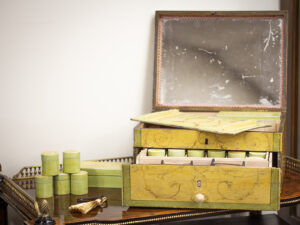
Birch
Birch is a pale, fine-grained hardwood from the Betula genus, native to temperate regions across the Northern Hemisphere. It has long been valued for its clean appearance, consistent texture, and strength, making it a versatile material for both practical and decorative uses.
The wood is typically light cream to pale yellow-brown in colour, with a close, straight grain and a smooth, even surface when finished. Its uniform structure allows it to be worked, turned, bent, and polished with ease, and it readily accepts stains and dyes, historically including treatments to imitate darker timbers such as mahogany.
Birch is most commonly encountered in furniture, cabinetry, veneered panels, plywood construction, flooring, and turned objects. In the context of fine boxes and cased wares, it has been used both structurally and decoratively, particularly where a clean, refined interior or secondary timber was required. Birch also burns hot and clean, contributing to its long-standing use as high-quality firewood.
Occasionally, birch develops decorative figure. Ripple or flame figuring can appear naturally, increasing its desirability for veneer work. The most prized form is Masur (Karelian) birch, a rare variant distinguished by dense ripple textures combined with dark streaks and irregular patterning, traditionally used for high-end furniture and luxury decorative objects.
While birch is strong and resilient, it requires careful seasoning, as it can be prone to movement if improperly dried. When well prepared, it remains stable, attractive, and highly serviceable.
Showing all 6 resultsSorted by latest