Burr Walnut
Burr walnut, also known as burl walnut, is one of the most prized and visually striking decorative timbers used in fine furniture and luxury objects. It is formed from abnormal growths that develop on walnut trees as a result of stress, injury, disease, or environmental conditions. These growths produce dense, highly figured wood with complex swirling grain, tight knots, and dramatic patterning that cannot be found in straight grown walnut.
The colour of burr walnut typically ranges from warm golden brown to deep chocolate tones, often highlighted by darker streaks and rich contrast within the grain. The surface takes an excellent polish, enhancing the depth and movement of the figure and giving the wood a refined and luxurious appearance. Each section of burr walnut is entirely unique, making it especially valued where visual impact is paramount.
Because burrs occur unpredictably and are limited in size, burr walnut has always been rare. Historically, it was most commonly prepared as veneer rather than solid timber. These veneers were carefully sliced and matched to create symmetrical or flowing patterns across larger surfaces. The more elaborate and densely figured the veneer, the higher its desirability and value.
Burr walnut has been used for centuries in the production of high quality furniture, decorative boxes, musical instruments, and refined interior fittings. In antique objects, it is most often encountered in veneered surfaces where craftsmanship and material selection were used to signal status, taste, and quality.
Showing all 12 resultsSorted by latest
-


Victorian Burr Walnut Decanter Box By George Betjemann
-
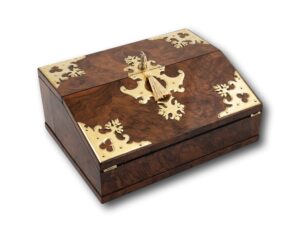
English Burr Walnut Writing Box Betjemann
-
 SOLD

Burr Walnut Games Compendium Betjemann
-
 SOLD

Antique Jewellery Box in Burr Walnut Victorian Period
-
 SOLD

Perfume Box in Walnut by Farthing & Thornhill
-
 SOLD
Figured Walnut Sewing Box Hausburg
-
 SOLD
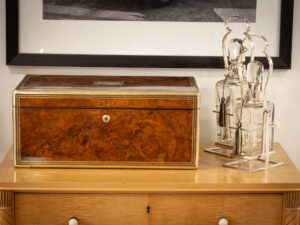
Antique Burr Walnut Writing Box
-
 SOLD

Victorian Burr Walnut Decanter Box
-
 SOLD

Feathered Burr Walnut Games Compendium Box
-
 SOLD

Victorian Burr Walnut Vanity Box
-
 SOLD
Victorian Burr Walnut Jewellery Box Asprey of London
-
 SOLD

Burr Walnut Vanity Box by Leuchars