Macassar Ebony
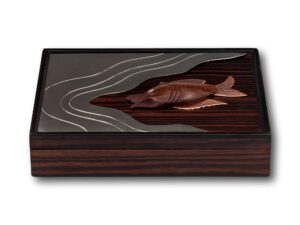
Macassar ebony is one of the most visually striking members of the ebony family, immediately recognisable by its bold, striped appearance. The heartwood displays dramatic bands of dark brown to black set against a golden yellow to reddish brown ground, creating strong natural contrast. The pale sapwood is sharply defined and is usually excluded from decorative work.
The grain is generally straight, though it can be interlocked in places, and the texture is fine and even with a natural lustre that polishes exceptionally well. As with most ebonies, Macassar ebony is extremely dense and heavy, giving finished surfaces a refined, almost glasslike appearance when properly worked.
Its density makes it challenging to work by hand or machine, with a pronounced blunting effect on cutting tools. The wood is also prone to movement and surface checking during drying if not handled carefully. Despite these difficulties, it turns beautifully and has long been valued for precision work where durability and visual impact are essential.
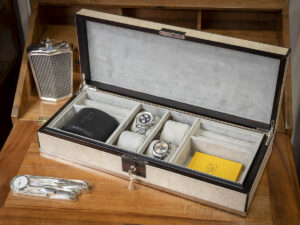
Macassar ebony has traditionally been used as a luxury veneer and for high quality decorative components, including cabinetry, boxes, musical instruments, and other finely made objects. Its association with prestige craftsmanship stems from both its rarity and its unmistakable appearance. The wood takes its name from the Indonesian port of Makassar, historically a key export point for this highly prized timber.
Showing all 8 resultsSorted by latest