Black Forest
Traditional Swiss wooden carvings known for detailed animal figures, linden and walnut wood carving, and a wide range of decorative and functional pieces.
Black Forest carvings refer to a tradition of detailed wooden sculpture that developed in Switzerland during the 19th century, despite the common belief that the craft originated in the Black Forest region of Germany. Workshops in Brienz became especially well known for producing finely carved figures, animals and domestic items that appealed to growing tourist markets. Bears became the most recognisable subject and appear across objects such as tobacco jars, hat stands, tables, stools and playful figurative groups.
Carvers also produced clocks, music boxes, furniture and other items featuring woodland animals engaged in lively poses, often climbing trees, supporting seats or interacting with carved foliage. Most pieces were carved from linden or walnut and are unsigned, although earlier examples can bear the names of respected Brienz carvers including Johann Huggler and the Ruef Brothers. Today, Black Forest carvings are valued for their character, craftsmanship and wide variety of forms, with many collectors seeking out the more whimsical or early signed works.
Showing all 13 resultsSorted by latest
-


Black Forest Carved Ibex Mountain Goat
-


Black Forest Carved Mirror
-


Swiss Black Forest Walking Bear
-


Black Forest Terrier Tobacco Jar
-


Black Forest Terrier Ashtray
-


Black Forest Fox and Hound Bookslide
-


Swiss Black Forest Walking Bear
-
 SOLD

Black Forest Carved Dog
-
 SOLD

Black Forest Eagle Owl Tobacco Jar
-
 SOLD

Black Forest Musical Tobacco Jar Ashtray
-
 SOLD
Swiss Black Forest Tobacco Jar
-
 SOLD

Swiss Black Forest Walking Bear
-
 SOLD

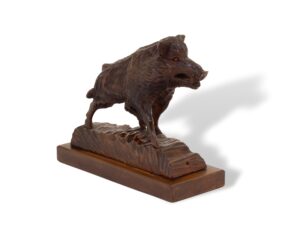
Swiss Black Forest Boar Figure