Boxwood
Boxwood is the timber of Buxus sempervirens, a slow growing evergreen native to Europe, northwest Africa and southwest Asia. It has been prized for centuries for its exceptional density, strength and ability to take extremely fine detail, making it one of the most technically refined woods used in decorative and functional objects.
The wood is typically a pale cream to soft yellow in colour, darkening gently with age and exposure to light. Sapwood and heartwood are generally indistinguishable, giving boxwood a uniform appearance. The grain is usually straight or slightly irregular, with an exceptionally fine and even texture and a subtle natural lustre when polished.
Boxwood is remarkably hard and heavy for its size, with outstanding dimensional stability once seasoned. Although difficult to work in flat boards and capable of blunting cutting tools, it excels in turning and carving. It holds crisp edges and minute detail better than almost any other European wood, which led to its historic use in precision items.
Because boxwood trees grow slowly and remain relatively small, the timber is rarely available in large sections. As a result, it was traditionally reserved for smaller but highly refined objects where precision and durability were essential. Common historical uses include turned boxes, instrument components, rulers, scientific instruments, chess pieces, tool handles and finely carved decorative elements.
In the context of antique decorative arts, boxwood was frequently chosen for small boxes, fitted interiors, and components requiring strength combined with exacting workmanship. Its durability and refined finish made it especially suitable for luxury objects intended for frequent handling.
Showing 1–18 of 67 resultsSorted by latest
-


George III Burr Yew Wood Tea Chest
-
 RESERVED

George III Satinwood Tea Caddy with Conch Shell Inlay
-


Regency Burr Yew Tea Caddy
-


George III Paper Scroll Tea Caddy
-


Georgian Harewood Tea Caddy with Tuscan Columns
-


Georgian Mahogany Knife Urns
-


Georgian Burr Yew Tea Caddy
-


Georgian Satinwood Tea Caddy with Conch Shell Inlay
-


Green Tortoiseshell Tea Caddy
-


Georgian Harewood Tea Caddy
-


Green Tortoiseshell Tea Caddy
-


Tea Caddy in Burr Yew Wood with Conch Shell Inlay
-


George III Satinwood Tea Caddy
-


Pair of Georgian Mahogany Cutlery Boxes
-
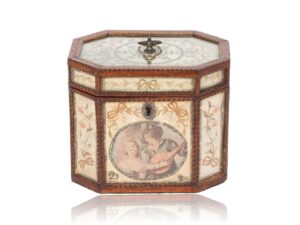

Georgian Glazed Silk Embroidered Tea Caddy
-
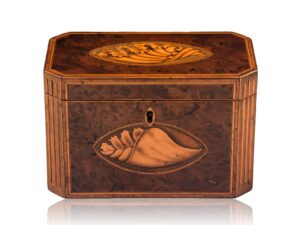

Burr Yew Shell Inlaid Tea Caddy
-


Georgian Harewood Tea Caddy
-
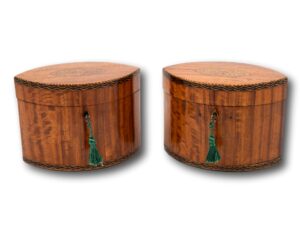
Georgian Pair of Satinwood Tea Caddies