Coromandel
Coromandel, also known historically as calamander or East Indian ebony, is one of the most dramatic and visually striking hardwoods used in fine decorative work. Native primarily to India and Sri Lanka, its name is derived from the Coromandel Coast of southeastern India, from where much of the timber entered European trade during the eighteenth and nineteenth centuries.
The heartwood of Coromandel is characteristically jet black, often broken by rich reddish brown or purplish streaking, creating bold natural contrasts. The sapwood is pale yellow to pink and clearly defined from the darker core. When well finished, high quality Coromandel can appear almost uniformly black with a deep natural lustre, a feature that led early writers to compare it to polished ebony or even black lacquer.
The grain is generally straight, though it may be irregular in some sections, and the texture is exceptionally fine and even. This density gives the wood a smooth, glass like finish when polished, making it particularly suitable for refined surfaces and detailed work. Its weight and hardness are considerable, placing it among the densest timbers historically used in cabinet making and decorative arts.
Coromandel was widely used during the Georgian and Victorian periods for luxury furniture, inlaid surfaces, boxes, writing slopes, dressing cases, and musical instrument components. Its dramatic colouring made it especially popular for veneered panels and contrast inlays, where its dark tones could be set against lighter woods such as satinwood, maple, or boxwood.
Working Coromandel requires considerable skill due to its density and blunting effect on tools. It is slow to season and can be prone to checking if dried improperly, but when handled correctly it turns and carves cleanly and accepts a very high polish without the need for heavy finishes.
Closely related to other East Indian ebonies, Coromandel should not be confused with African blackwood, which despite its similar appearance belongs to the rosewood family. Genuine Coromandel remains scarce, and surviving antique examples are especially valued for their rarity, depth of colour, and association with high quality craftsmanship.
Showing 1–18 of 125 resultsSorted by latest
-
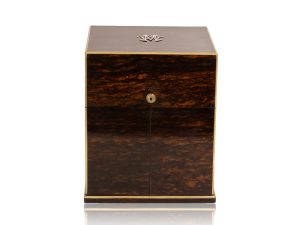
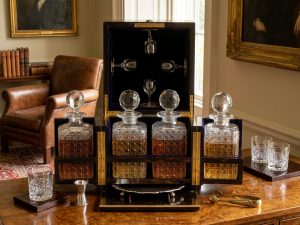
Edwardian Coromandel Decanter Box Retailed by Mappin and Webb
-


Anglo Indian Coromandel Sewing Box with Silver Mounts
-


Victorian Burr Walnut Decanter Box By George Betjemann
-


Coromandel Tantalus by George Betjemann
-
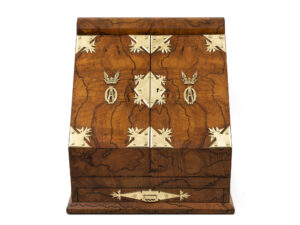

Victorian Olivewood Stationery Cabinet by Betjemann and Leuchars
-


Victorian Coromandel Decanter Set by Leuchars
-


Victorian Coromandel Necessaire Box by Lund
-


Coromandel & Sterling Silver Writing Box Betjemann
-


Coromandel Games Compendium for King Edward VII by Betjemann
-


Coromandel Vanity Box of Lady Elizabeth Lucy Cuffe
-


Vanity Box by Mappin & Webb in Coromandel with Sterling Silver
-


Coromandel Jewellery Box by George Betjemann with Malachite
-


Coromandel Games Compendium by George Betjemann & Chapman
-


Coromandel Vanity Box by George Betjemann & Sons
-


Tantalus by George Betjemann Veneered in Coromandel and Satinwood
-


Victorian Coromandel Stationery Box & Blotter Folder
-


Coromandel Jewellery Cabinet Betjemann and Sons
-


Tea Caddy by George Betjemann in Coromandel and Malachite