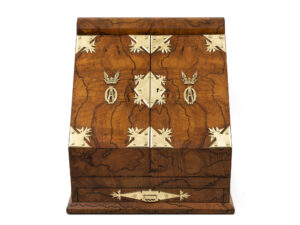
Olive
Olive wood comes from Olea europaea, a slow growing fruit tree native to the Mediterranean region and cultivated for thousands of years. While best known for olive oil and fruit production, the wood itself has long been valued for its distinctive appearance, density, and historical associations.
The heartwood of olive is typically yellow to light reddish brown, marked by dramatic darker brown or black veining that gives each piece a highly individual character. Sapwood is paler and usually clearly defined. Over time, the colour deepens and develops a warm, rich tone. Olive wood often displays lively grain patterns, which may be straight, interlocked, or irregular, and can include curly or wild figuring.
Olive is a dense hardwood with a fine, even texture and a natural lustre that responds well to polishing. Despite its hardness, it turns particularly well, making it well suited to smaller refined objects. The wood can be challenging to season, with a tendency toward movement or distortion if not carefully dried, especially when taken from branches rather than trunk wood.
Because olive trees are rarely felled while productive, timber availability is limited. Most olive wood comes from pruned branches or from trees removed due to age, disease, or storm damage. This scarcity, combined with its striking appearance, has made olive wood especially desirable for decorative work.
Historically and culturally, olive trees symbolise longevity, peace, and endurance. Many specimens in the Mediterranean are believed to be centuries old, with some still producing fruit. Olive wood has therefore been closely associated with religious objects, decorative boxes, fine veneers, and turned pieces where visual impact is paramount.
Showing all 5 resultsSorted by latest