Walnut
Walnut refers to several species within the Juglans genus, with European Walnut Juglans regia and Black Walnut Juglans nigra being the most important timbers in historical and contemporary woodworking. Walnut has been valued for centuries for its combination of beauty, strength and excellent working qualities.
The heartwood ranges from pale brown to deep chocolate brown, often with darker streaks and occasional grey, purple or reddish tones. The sapwood is sharply defined and much paler, almost white. Figured material such as crotch, curl and burr is highly prized and has long been used for veneers and decorative panels.
Walnut works easily by hand and machine, finishes exceptionally well and develops a rich surface lustre over time. These qualities made it a favoured wood for fine furniture, cabinetry, gunstocks and musical instruments from the seventeenth century onwards. Walnut burr veneer remains one of the most valuable decorative veneers, used historically by cabinetmakers and today by luxury furniture and interior designers.
European Walnut is also the source of edible walnuts, and most timber available today comes from cultivated trees rather than wild populations. Its balance of elegance, durability and workability continues to make walnut one of the most respected and desirable hardwoods in furniture and decorative arts.
Showing 1–18 of 49 resultsSorted by latest
-


Victorian Burr Walnut Decanter Box By George Betjemann
-


Black Forest Carved Dog
-


Swiss Black Forest Walking Bear
-


Black Forest Terrier Tobacco Jar
-


Walnut Tea Chest George III Sarcophagus Form
-


Black Forest Terrier Ashtray
-


Swiss Black Forest Walking Bear
-
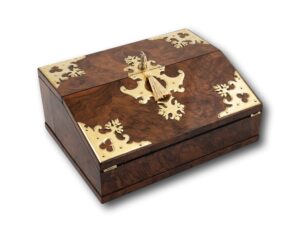
English Burr Walnut Writing Box Betjemann
-
 SOLD

Black Forest Eagle Owl Tobacco Jar
-
 SOLD

Antique Jewellery Box in Burr Walnut Victorian Period
-
 SOLD
Swiss Black Forest Tobacco Jar
-
 SOLD

Swiss Black Forest Walking Bear
-
 SOLD
Figured Walnut Sewing Box Hausburg
-
 SOLD
Antique Victorian Walnut & Coromandel Jewellery Box
-
 SOLD

Feathered Burr Walnut Decanter Box Betjemann Kenneth
-
 SOLD

Admiral Nelson Commemorative Tea Caddy
-
 SOLD

Victorian Burr Walnut Decanter Box
-
 SOLD

Feathered Burr Walnut Games Compendium Box