Blackthorn (Sloe)
Blackthorn botanically Prunus spinosa is a dense slow growing hardwood derived from a thorny deciduous shrub or small tree native to much of Europe and western Asia. Although best known for its fruit the sloe the timber has long been valued for its strength weight and ability to take a fine polish.
The wood itself is close grained and hard with a colour that ranges from pale brown to deeper reddish or purplish tones often darkening with age. Growth is typically twisted and irregular due to the plant’s shrubby habit and defensive spines meaning straight usable sections are limited and rarely large. As a result blackthorn has historically been reserved for smaller objects where durability and tactile quality are more important than scale.
Once seasoned blackthorn is tough and resilient with excellent resistance to wear. It works best with sharp tools and careful handling but rewards effort with a smooth lustrous finish. These qualities made it particularly suitable for turned or hand finished items.
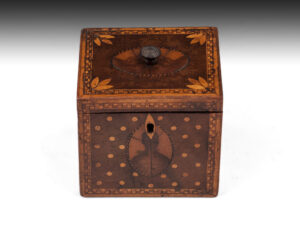
Traditionally blackthorn has been used for walking sticks canes tool handles and clubs most famously the Irish shillelagh. Its association with functional yet symbolic objects has given the wood a strong cultural identity especially in Britain and Ireland. In domestic and decorative contexts it has occasionally been employed for small boxes fittings and components where a hard wearing and characterful timber was desired.
Due to its slow growth and limited workable size blackthorn has never been a commercial cabinet timber. Surviving antique examples are therefore relatively uncommon and pieces incorporating blackthorn are usually the result of deliberate material choice rather than convenience.
Showing all 6 resultsSorted by latest