

Red Tortoiseshell Tea Caddy
SOLD
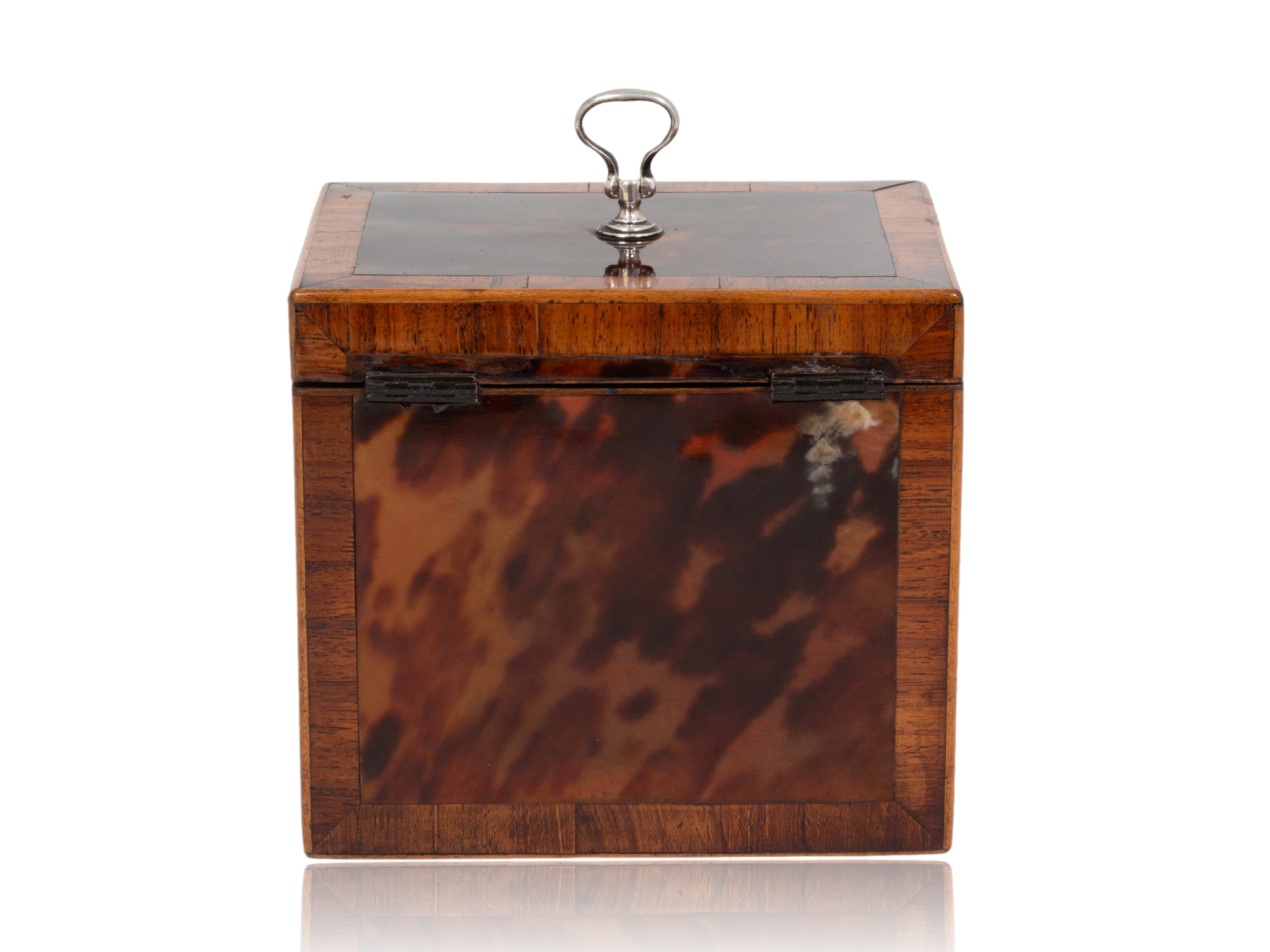
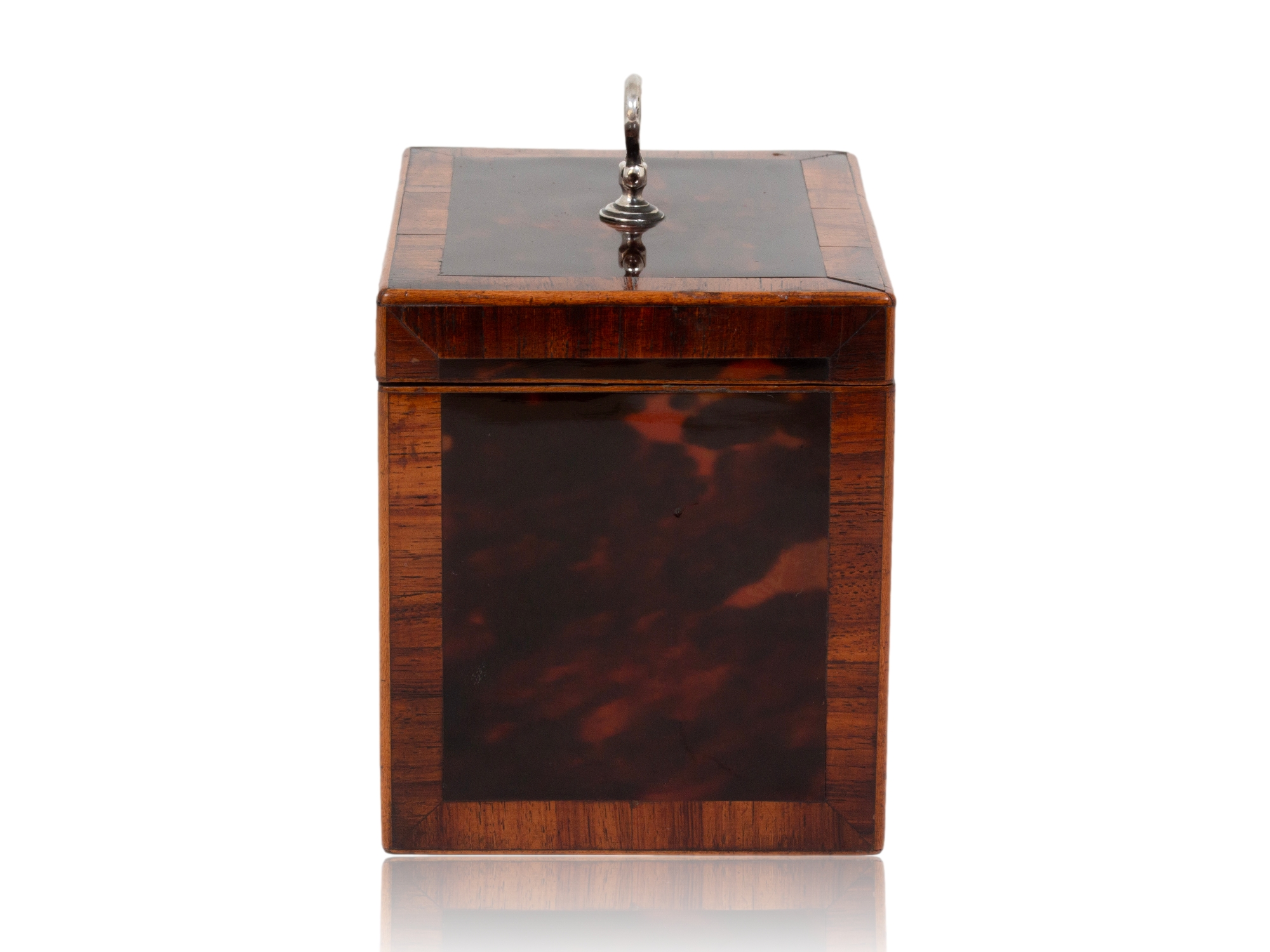
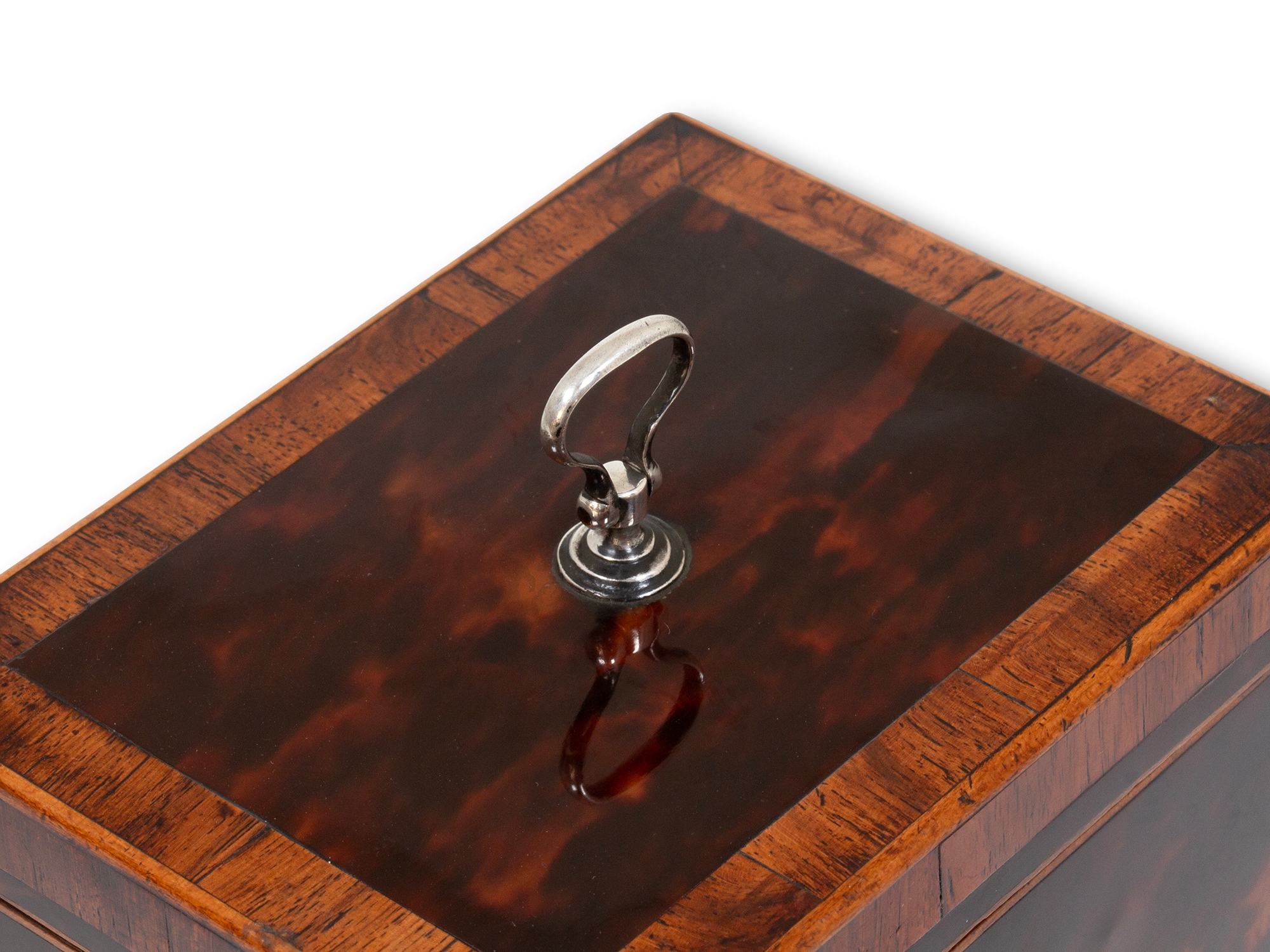
Georgian Tea Caddy Circa 1780 From our Tea Caddy collection, we are pleased to introduce this unusual wooden mounted red tortoiseshell tea caddy. The tea caddy of square form edged in boxwood with tulip wood cross banding framing individual panels... Read More
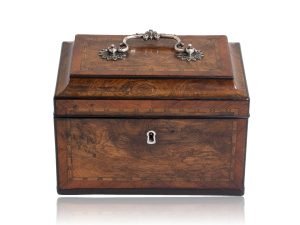
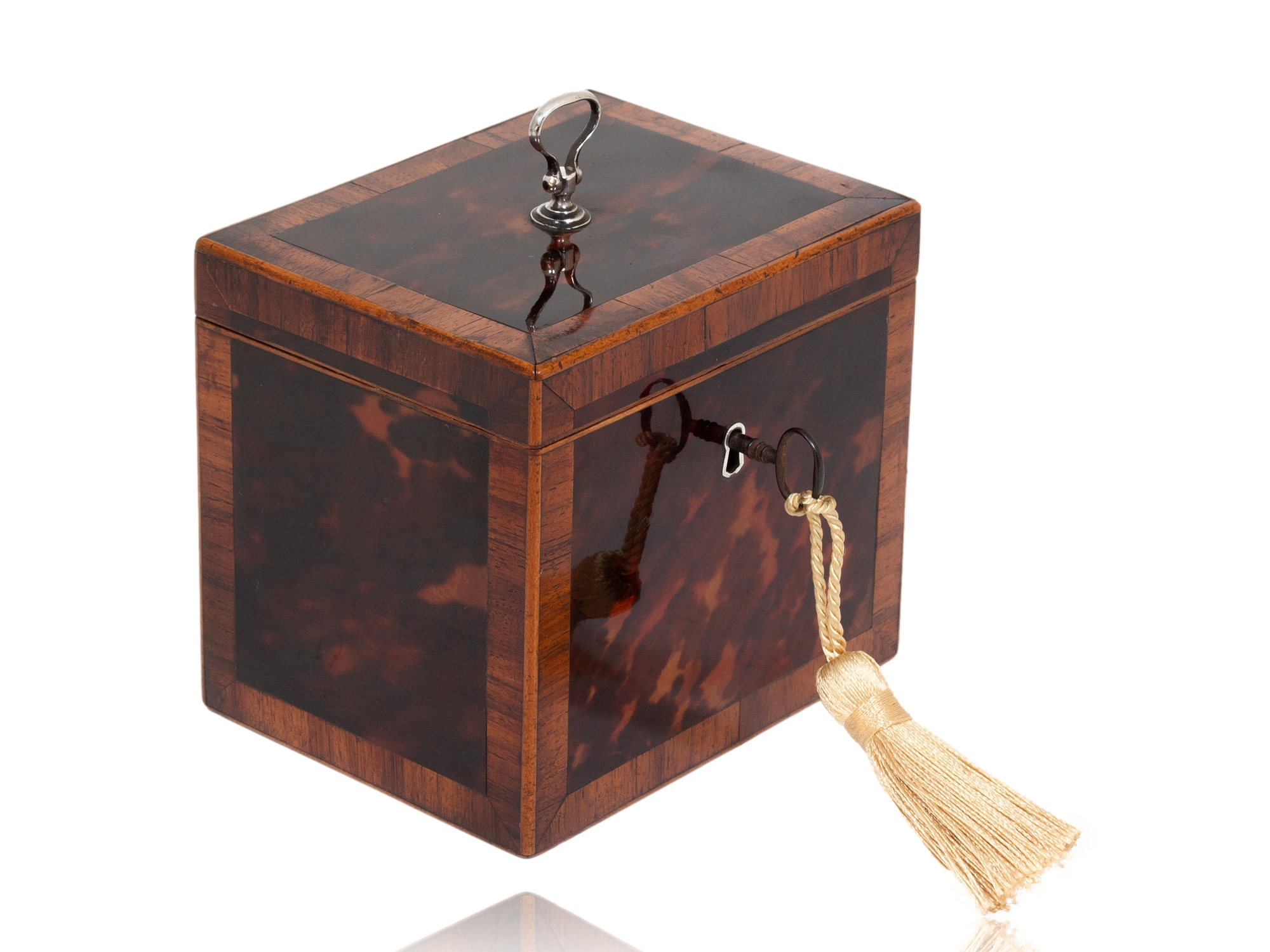
George III red tortoiseshell tea caddy with tulipwood framed panels circa 1780
| Dimensions | 12 × 9 × 11 cm |
|---|---|
| Country | |
| Medium | |
| Period | |
| Year | |
| SKU | 501733TPCE |

Description
Description
Georgian Tea Caddy Circa 1780
From our Tea Caddy collection, we are pleased to introduce this unusual wooden mounted red tortoiseshell tea caddy.
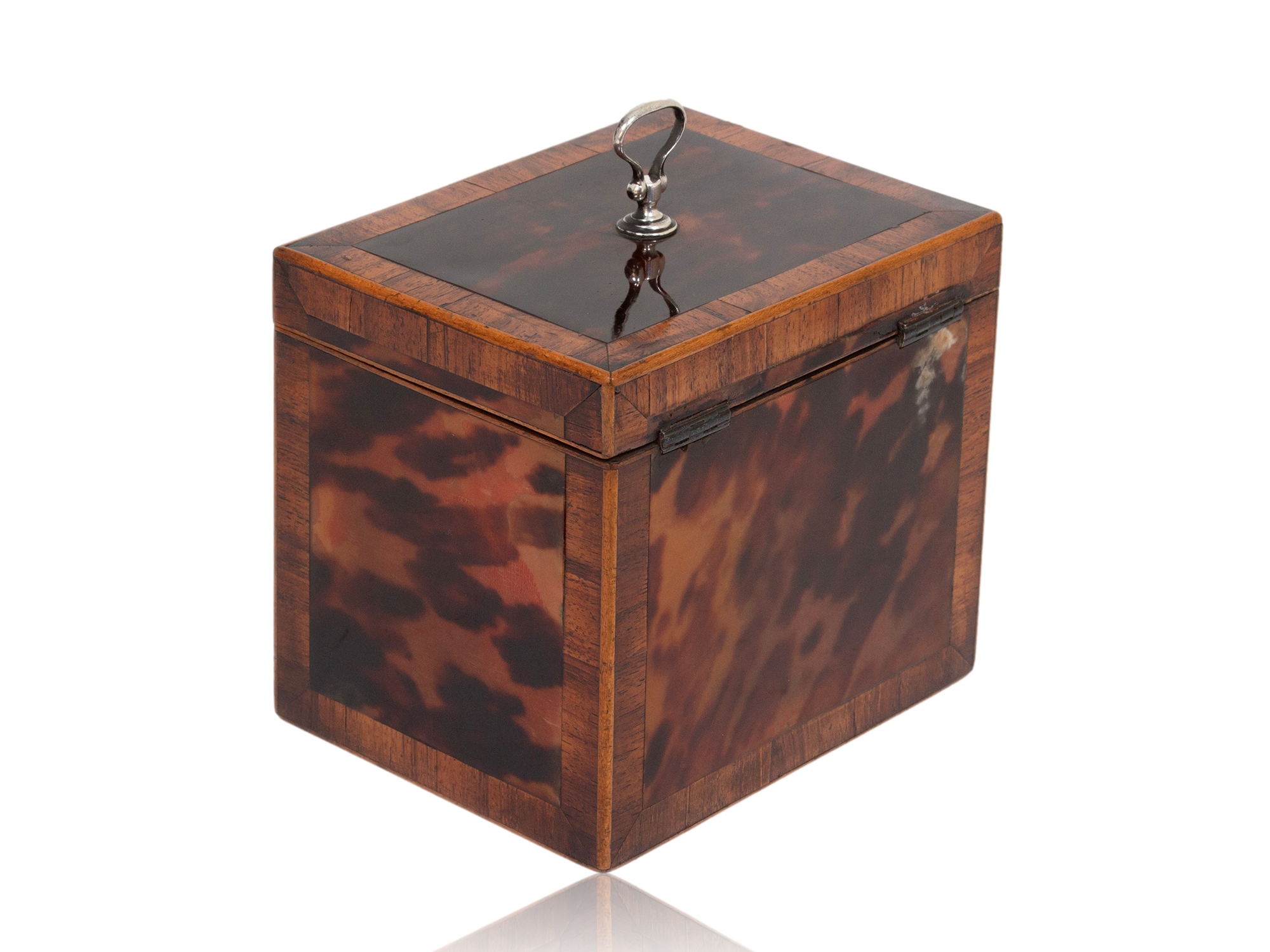
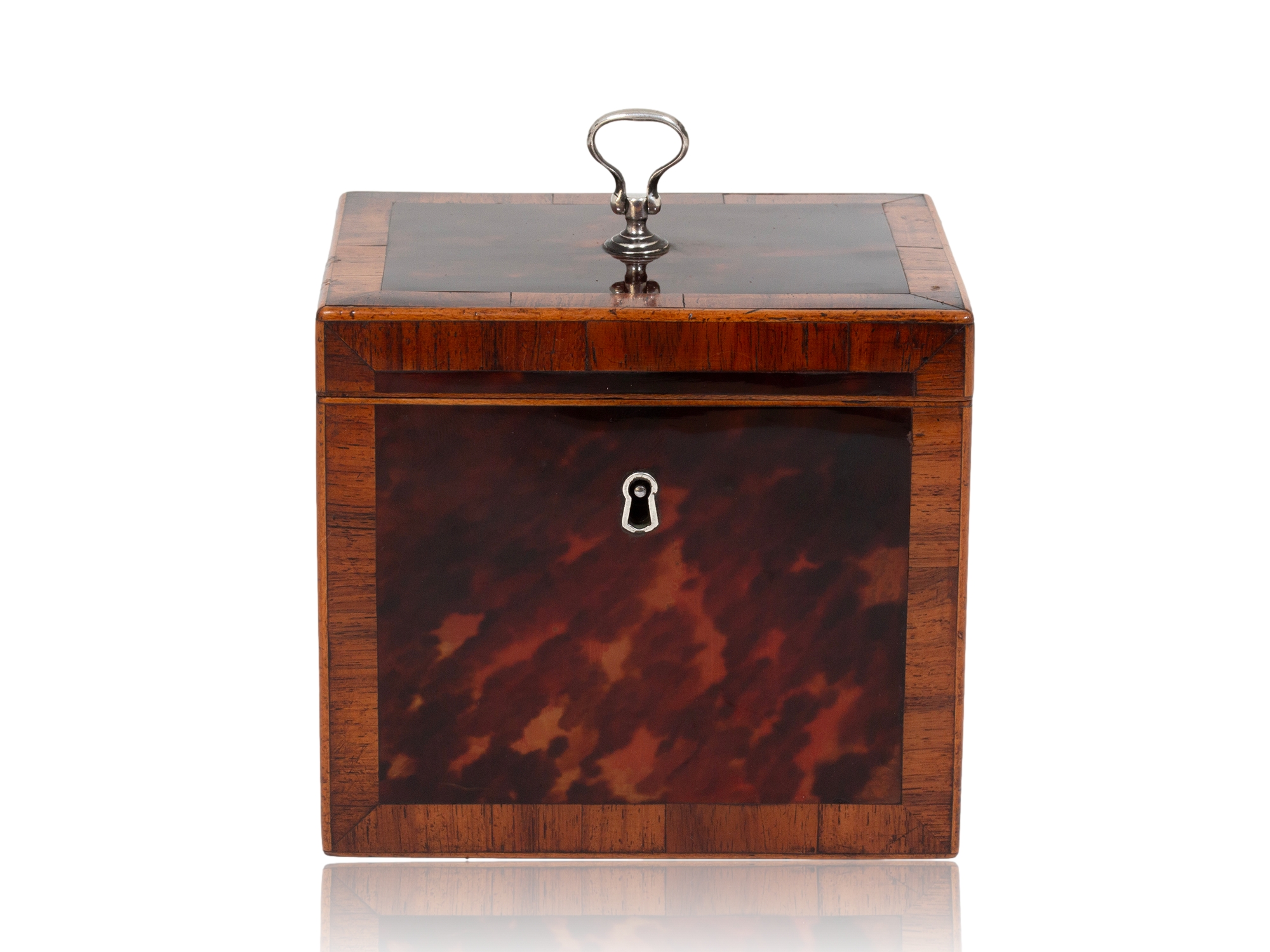
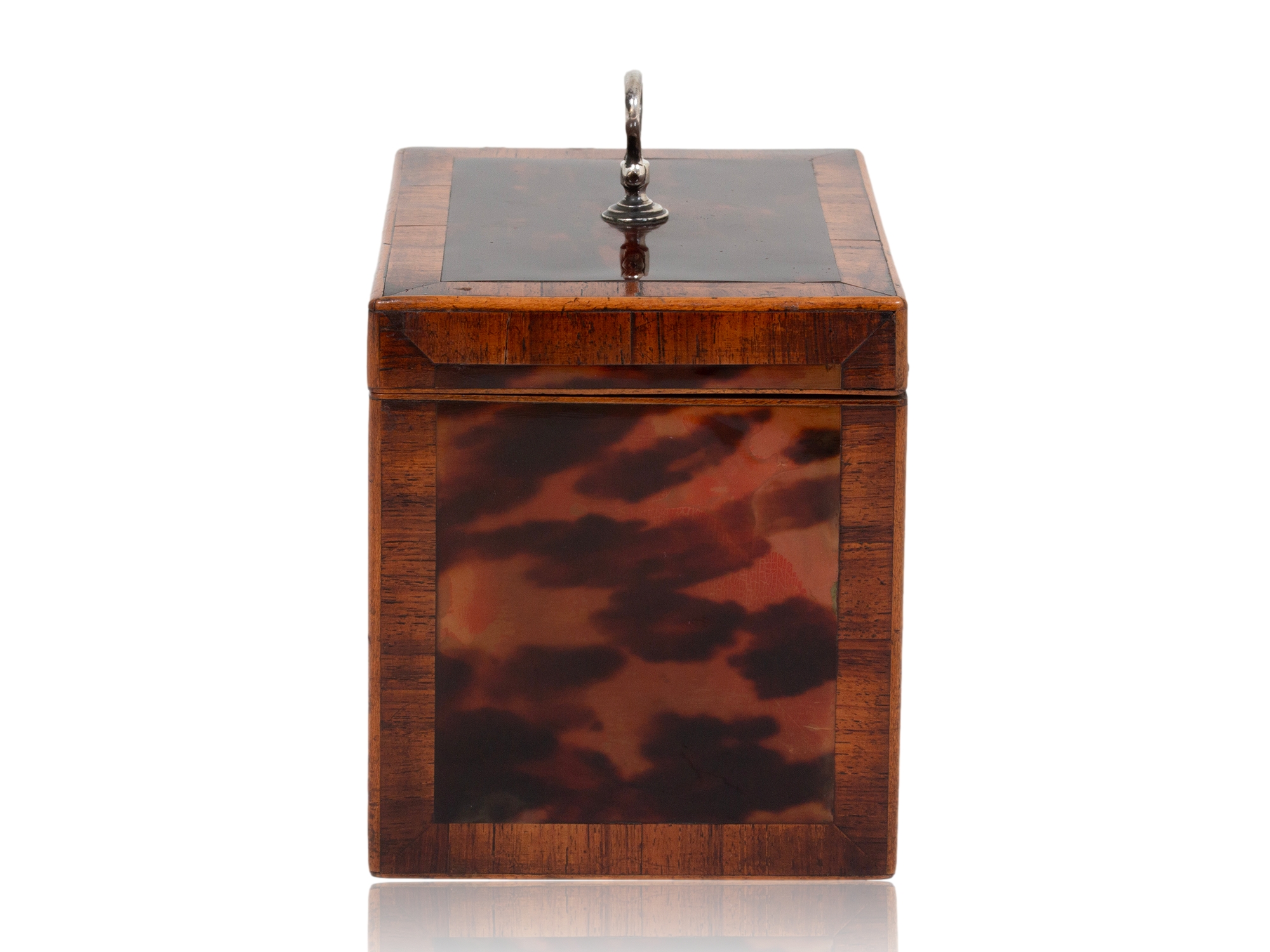
The tea caddy of square form edged in boxwood with tulip wood cross banding framing individual panels of veneered tortoiseshell across the exterior giving a wonderful colour contrast with a superb patination throughout. The front features a silver key shaped key profile and is surmounted by a silver axe shaped loop handle. The interior of the tea caddy features a single tea compartment faced in boxwood with a silver foil lining.
Dating to George III circa 1780 the tea caddy is an excellent early example of red tortoiseshell with an unusual pairing of cross banded tulip wood.
The Tea Caddy comes complete with a working lock and tasselled key.
Tortoiseshell
describes a type of decorative material made from the shells of certain species of sea turtles. The shells of these turtles are composed of a hard, glossy substance called keratin, which can be cut and shaped into a variety of decorative items. Tortoiseshell has been used for centuries to make a range of decorative objects, including combs, brush handles, and other small items. It is also sometimes used to make tea caddies, as it is strong, durable, and can be polished to a high shine. The term “tortoiseshell” is used to describe these decorative items, even though they are made from the shells of sea turtles because the term has been used historically to refer to this material.
Tulipwood
is also known as Brazilian Tulipwood, Brazilian Pinkwood and Bahia Rosewood. It is found in South America, mainly Brazil. The colour is warm yellow with streaks or brown-red grain.
Georgian Era
was a period in British history dating from 1714-1837, the Georgian era after the Hanoverian kings George I, George II, George III and George IV.
If you are purchasing Tortoiseshell or Ivory pieces and are outside the UK you must have a CITES certificate in order to import the item into your country. We can obtain these on your behalf at a cost of £50 and these can take up to 30 working days to arrive at our office. Due to the strict exporting rules of these pieces, they may also come with further shipping costs. Please ensure you contact us prior to purchase for a quote.
With every purchase from Mark Goodger Antiques, you will receive our latest catalogue, a Certificate of Authenticity, detailed care instructions for your chosen piece and an independent invoice (for insurance purposes) will be enclosed. As well as being protected by a no-hassle, money-back policy, your piece will be entirely insured during the shipping process to ensure the safety of your item.
Additional information
Additional information
| Dimensions | 12 × 9 × 11 cm |
|---|---|
| Country | |
| Medium | |
| Period | |
| Year | |
| SKU | 501733TPCE |