Vanity Boxes
Vanity Boxes, also known as Dressing Cases or travelling necessaires, were among the most sophisticated personal boxes produced from the late eighteenth century through to the final quarter of the nineteenth century. Designed to carry personal toiletries and grooming items while travelling, they served both ladies and gentlemen of society and remain some of the most complex and elegant antique boxes made.
Early dressing cases were predominantly made for men and were used for military campaigns, education, and extended travel. These boxes typically housed shaving tools, colognes, manicure implements, brushes, and glass bottles, all precisely fitted within bespoke interiors. From the early nineteenth century, as travel became more common for affluent women, vanity boxes evolved to reflect changing social customs. Ladies’ vanity boxes included perfume bottles, powders, mirrors, combs, hairbrushes, manicure sets, and often concealed jewellery trays or writing compartments.
The finest vanity boxes were made from exceptional materials including Mahogany, Rosewood, Walnut, Satinwood, burr woods, and exotic timbers, often combined with brass stringing, mother of pearl inlay, tortoiseshell veneers, or solid silver and gilt mounts. Interiors were typically lined with silk, velvet, leather, or paper, and fitted with finely blown glass bottles, many with silver, gold, or enamelled lids. At the highest level, boxes were specially commissioned for royalty and the upper aristocracy, frequently bearing monograms, crests, or fully bespoke internal arrangements tailored to the owner’s requirements.
Vanity boxes were not merely functional objects but statements of wealth, taste, and refinement. Their complexity increased throughout the nineteenth century, reflecting the growth of large households, extended house visits, and the role of personal attendants. By the late Victorian period, dressing cases for men declined in popularity as fashions changed, while vanity boxes for women became increasingly widespread across the upper and middle classes.
At Mark Goodger Antiques, we curate vanity boxes spanning over three hundred years, selecting examples that retain their original character, fittings, and patination. Conservation is undertaken only where necessary, with a strong emphasis on preserving originality, surface finish, and historic materials. Original glass bottles, tools, and internal fittings are retained wherever possible, as these elements are fundamental to the integrity and value of the box.
Today, antique vanity boxes remain highly desirable for their design, materials, and insight into social history. Whether displayed, collected, or used, they continue to offer a rare combination of beauty, function, and craftsmanship that modern equivalents cannot replicate.

Vanity Boxes
Vanity Boxes, also known as Dressing Cases or travelling necessaires, were among the most sophisticated personal boxes produced from the late eighteenth century through to the final quarter of the nineteenth century. Designed to carry personal toiletries and grooming items while travelling, they served both ladies and gentlemen of society and remain some of the most complex and elegant antique boxes made.
Early dressing cases were predominantly made for men and were used for military campaigns, education, and extended travel. These boxes typically housed shaving tools, colognes, manicure implements, brushes, and glass bottles, all precisely fitted within bespoke interiors. From the early nineteenth century, as travel became more common for affluent women, vanity boxes evolved to reflect changing social customs. Ladies’ vanity boxes included perfume bottles, powders, mirrors, combs, hairbrushes, manicure sets, and often concealed jewellery trays or writing compartments.
The finest vanity boxes were made from exceptional materials including Mahogany, Rosewood, Walnut, Satinwood, burr woods, and exotic timbers, often combined with brass stringing, mother of pearl inlay, tortoiseshell veneers, or solid silver and gilt mounts. Interiors were typically lined with silk, velvet, leather, or paper, and fitted with finely blown glass bottles, many with silver, gold, or enamelled lids. At the highest level, boxes were specially commissioned for royalty and the upper aristocracy, frequently bearing monograms, crests, or fully bespoke internal arrangements tailored to the owner’s requirements.
Vanity boxes were not merely functional objects but statements of wealth, taste, and refinement. Their complexity increased throughout the nineteenth century, reflecting the growth of large households, extended house visits, and the role of personal attendants. By the late Victorian period, dressing cases for men declined in popularity as fashions changed, while vanity boxes for women became increasingly widespread across the upper and middle classes.
At Mark Goodger Antiques, we curate vanity boxes spanning over three hundred years, selecting examples that retain their original character, fittings, and patination. Conservation is undertaken only where necessary, with a strong emphasis on preserving originality, surface finish, and historic materials. Original glass bottles, tools, and internal fittings are retained wherever possible, as these elements are fundamental to the integrity and value of the box.
Today, antique vanity boxes remain highly desirable for their design, materials, and insight into social history. Whether displayed, collected, or used, they continue to offer a rare combination of beauty, function, and craftsmanship that modern equivalents cannot replicate.
Showing 1–18 of 76 resultsSorted by latest
-


Vanity Box in Rosewood by Howell James & Co
-


Coromandel Vanity Box of Lady Elizabeth Lucy Cuffe
-


Vanity Box by Mappin & Webb in Coromandel with Sterling Silver
-


Coromandel Jewellery Box by George Betjemann with Malachite
-


Stationery Carriage Companion by Asprey
-


Coromandel Vanity Box by George Betjemann & Sons
-


Calamander Silver Vanity Box by Hausburg
-


Burr Walnut and Silver Mechanical Vanity Box Royal Connection
-
 RESERVED
Victorian Coromandel Vanity Box Lund
-
 SOLD
SOLD
Victorian Coromandel Vanity Box from the Glyn Cywarch Estate
-
 SOLD
SOLD
French Perfume Box in Tulipwood with Sevres Porcelain Plaque
-
 SOLD
SOLD
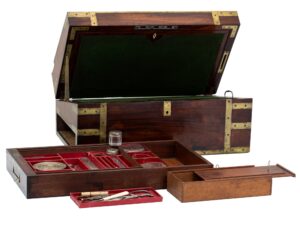
Captains Campaign Military Writing Box Compendium
-
 SOLD
SOLD
Vanity Box by David Edwards in Rosewood with Silver
-
 SOLD
SOLD
Coromandel Vanity Box by E & E Emanuel
-
 SOLD
SOLD
Asprey David Edwards Rosewood Vanity Box
-
 SOLD
SOLD
Vuitton LV Vintage Jewellery Case
-
 SOLD
SOLD
Perfume Box in Walnut by Farthing & Thornhill
-
 SOLD
SOLD
Louis Vuitton LV Jewellery Case Vintage